
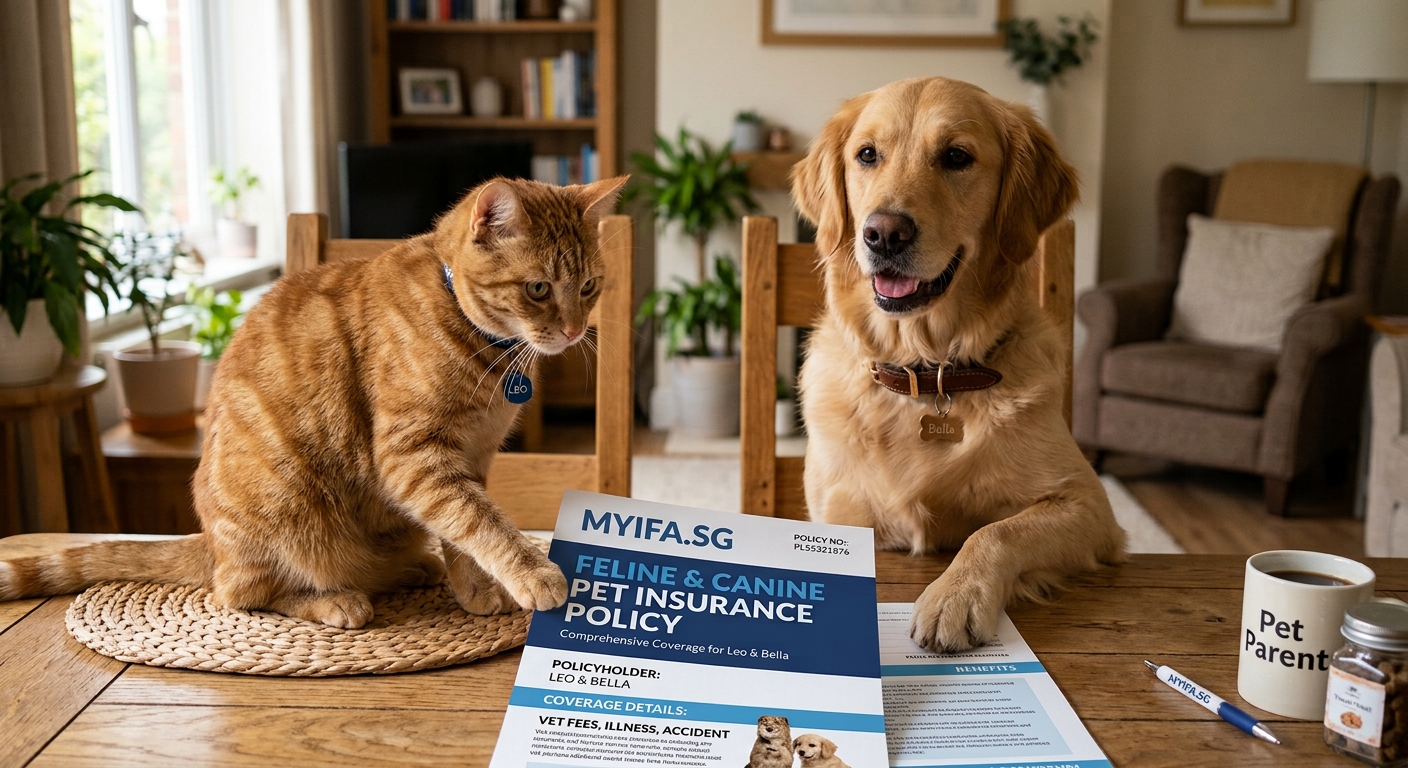
For many of us, our cats and dogs are more than pets, they’re family. Yet for many owners, pet insurance remains something considered only after an unexpected vet bill lands in the thousands. This article walks through what pet insurance actually covers, what it typically excludes, and what cat and dog owners in Singapore should look out for before signing up.
Why Pet Insurance Matters
Veterinary medicine has advanced significantly. Clinics here now offer MRI scans, orthopaedic surgery, chemotherapy, and other treatments that would have been unthinkable for a pet a generation ago. That’s good news for your pet’s health but it comes at a cost. A minor surgery can easily run into several thousand dollars.
Pet insurance exists to remove the financial hesitation from that moment. When your dog needs emergency surgery or your cat is diagnosed with an illness, you want to be making decisions based on what’s best for them and not on what you can afford that month.
There’s also a practical reason to act early: most insurers set a maximum enrolment age, typically around 9 years old, and enrolling when your pet is young and healthy gives you the broadest possible coverage with the fewest exclusions. Waiting until your pet is older or until after a health issue appears often means conditions get excluded as “pre-existing,”. In the worst case scenario, the pet becomes ineligible altogether.
How Pet Insurance Works
Pet insurance operates similarly to human health insurance. You pay a premium, and in return, the insurer reimburses eligible veterinary expenses, subject to specific policy terms.
Coverage in the Singapore market typically falls into these categories:
Pet insurance can help provide financial protection against eligible veterinary expenses, such as:
🐶 Accidents & injuries – costs of surgery, hospitalisation, and related treatment
🐱 Illnesses
🏥 Hospitalisation & surgery
💊 Eligible treatments & medication
👥 Third Party Liability
❤️ Other benefits, depending on the policy
The benefits differs across insurers. Some insurers bundle outpatient illness cover into their base plan; others treat it as a paid add-on. This is one of the most important and most overlooked differences between policies, and it’s worth checking carefully before assuming your pet is “fully covered.”
What’s Typically Excluded
Every pet insurance policy in Singapore carries a set of standard exclusions. While the specifics vary by insurer, the common ones include:
- Pre-existing conditions – anything your pet showed symptoms of, or was treated for, before the policy started
- Hereditary and congenital conditions – often only covered up to a defined list, and only for younger pets after a waiting period
- Preventive healthcare – vaccinations, deworming, flea and tick control (unless under a specific wellness add-on)
- Behavioural conditions – anxiety, phobias, and similar issues
- Cosmetic or elective procedures – tail docking, ear cropping, declawing, nail clipping
- Breeding-related conditions – pregnancy, whelping, spaying/neutering itself
- Orthopaedic conditions in older pets or specific breeds – hip dysplasia, luxating patella, and intervertebral disc disease (IVDD) are frequently excluded or only partially covered, which matters if you own a breed prone to these issues
This list isn’t exhaustive, and exclusions differ meaningfully from one insurer to the next . It is important to read the full policy wording matters more than skimming a benefits table.
Cats vs Dogs: Points to Note
While most policies cover both cats and dogs under the same framework, there are a few areas where coverage diverges:
- Theft cover, where offered, is often restricted to dogs only. Cats are typically excluded from this benefit.
- Breed-specific liability limits sometimes apply to dogs, with certain breeds (commonly associated with higher bite-risk, such as Rottweilers, Dobermans, or Pit Bull-type dogs) facing reduced third-party liability limits.
- Vaccination-preventable disease exclusions are usually listed separately for cats and dogs, reflecting the different diseases each species is vaccinated against (e.g. feline panleukopenia and FIV for cats; canine distemper and parvovirus for dogs).
- Spaying/neutering-linked exclusions appear in both species, but the specific conditions tied to them differ — mammary tumours and uterine conditions for unspayed females, prostate and testicular issues for unneutered males.
What to Compare Before You Buy
Singapore’s pet insurance market has several established providers, and their policies differ in meaningful ways:
| What to check | Why it matters |
|---|---|
| Is outpatient/non-surgical illness cover included or optional? | Determines whether everyday vet visits are covered, not just emergencies |
| Deductible and co-insurance structure | Affects your out-of-pocket cost per claim, and often increases as your pet ages |
| Waiting periods | Illness and injury usually have separate waiting periods (commonly 14–90 days) before claims are payable |
| Hereditary/congenital condition cover | Some insurers cover a defined list for younger pets after 12 months; others exclude broadly |
| Maximum renewal age | Determines how long your pet stays insurable |
| Third-party liability limits and breed restrictions | Relevant if you own a larger or listed breed |
| Optional add-ons available | Chemotherapy, complementary therapy, wellness care, and boarding cover are often separate purchases |
Because premiums and terms are reviewed and updated regularly, it’s worth contacting insurers directly, or speaking with a financial adviser, for the most current policy details rather than relying on older marketing material.
Practical Steps for Pet Owners
- Enrol while your pet is young and healthy. This maximises coverage and minimises exclusions.
- Read the full policy wording, not just the benefits summary. The exclusions section is where the real differences between insurers show up.
- Match the policy to your pet’s breed and risk profile. A breed prone to hip dysplasia or IVDD deserves extra scrutiny of how (and whether) those conditions are covered.
- Compare more than the premium. A cheaper plan with a narrower definition of “illness cover” may cost you more at claim time.
- Speak to your vet. They can give you a realistic sense of the health risks your specific pet may face, which helps you choose coverage that actually fits.
Pet insurance isn’t just about managing cost. It’s about making sure that when your cat or dog needs care, the decision is about their health, not your bank balance. With veterinary treatment options expanding every year, having the right coverage in place means you can say yes to the best possible care, whenever your pet needs it.
You may also be interested to understanding the differences that matter in pet insurance.
Should you need an advice on Pet Insurance, drop us a message via WhatsApp.
This article is for general information purposes and does not constitute financial advice. Pet insurance terms, exclusions, and premiums vary by insurer and are subject to change. Always review the current policy wording or consult a licensed financial adviser before purchasing.
 My IFA@Sg