
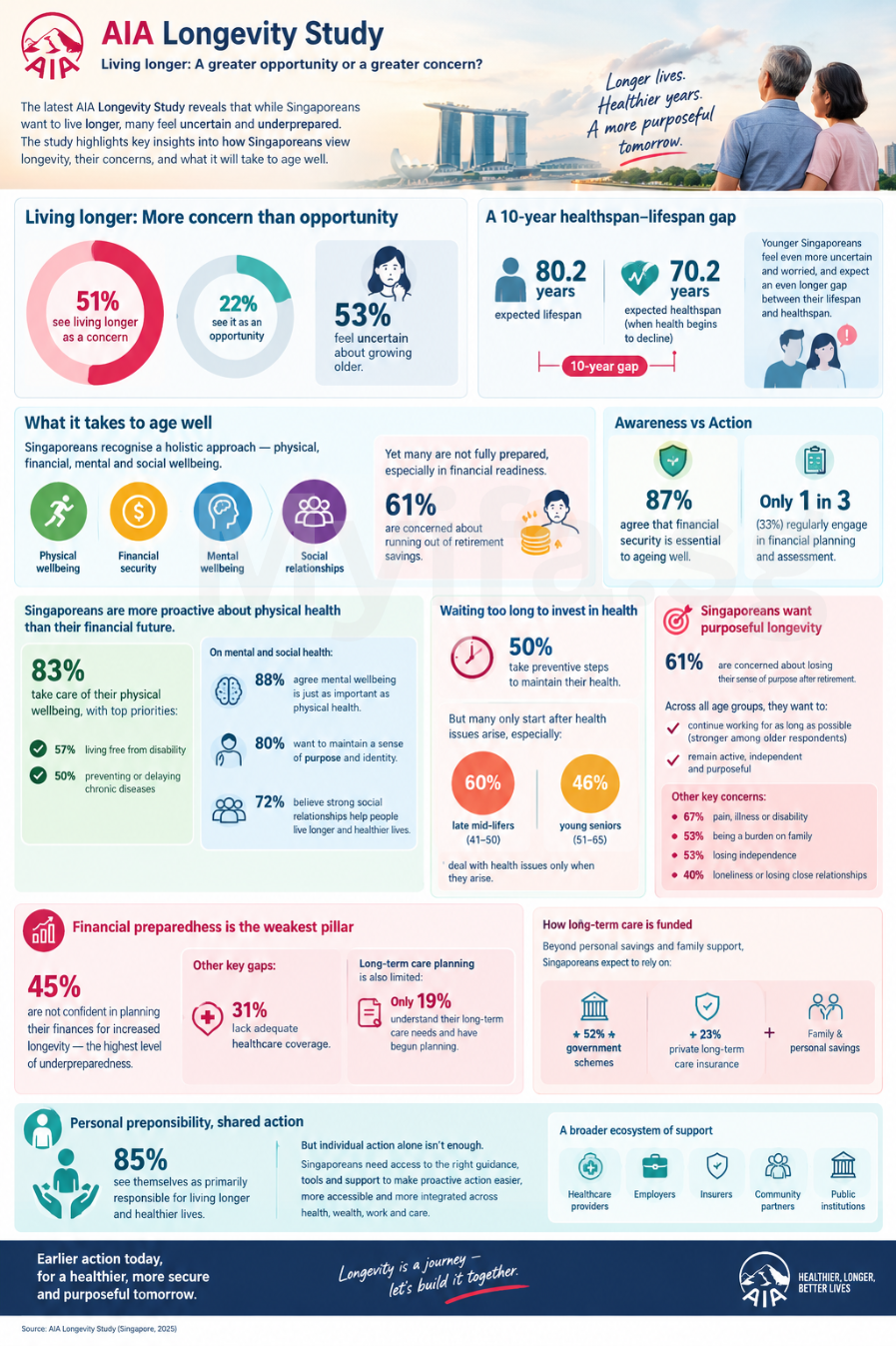
Living longer should be a gift. Yet according to the latest AIA Longevity Study, 51% of Singaporeans see longer lives as more of a concern than an opportunity, and only 22% see it the other way round.
The study reported Singaporeans expect to live to about 80, but expect their health to start declining around 70. That leaves a 10-year gap between lifespan and healthspan, and younger Singaporeans expect the gap to be even wider. No wonder 53% feel uncertain about growing older.
Most people know what it takes to age well:
- 87% agree financial security is essential to ageing well
- 88% say mental wellbeing is as important as physical health
- 72% recognise that strong relationships help us live longer and healthier
Although the awareness level is high, the action taken is low. Only 33% regularly review or plan their finances, and 45% are not confident about planning for a longer life. This is the weakest of all the areas measured. 61% worry about running out of retirement savings, and 31% lack adequate healthcare coverage.
Many people waited too long to act and started to look after their health once ageing shows up. Among those aged 41 to 50, 60% deal with health issues only when they arise. The earlier you start, the more you can extend not just your lifespan, but your healthspan.
One of the biggest blind spot is Long-term care needs. Only 19% understand their long-term care needs and have started planning. More than half (52%) expect to rely on government schemes, while just 23% expect to use private long-term care insurance. Meanwhile, 67% fear pain, illness or disability, and 53% worry about becoming a burden on their family or losing their independence.
Singaporeans want purposeful longevity, meaning staying active, independent and engaged. 61% worry about losing their sense of purpose after retirement, and most want to keep working for as long as they can.
The study shows a clear gap between aspiration and preparedness. While 85% see healthy longevity as their own responsibility, individual effort alone is not enough. People need the right guidance, tools and support across health, wealth, work and care, and they need it earlier.
Where to start:
- Review your retirement income plan and check whether it can last 90+ years
- Check that your healthcare coverage is adequate
- Understand your long-term care options and costs
- Start preventive health habits now, not after problems appear
Planning early is easier than planning late. If you’d like to talk through your own longevity plan, reach out to us at Avallis Financial.

