
It is the 15th of February 2026, two days before Chinese New Year, the single busiest season for anyone selling bak kwa in Singapore. The orders are in. The anticipation is high. Families across the island are counting on that familiar sweet, smoky flavour to mark the beginning of a new year. Then, the exhaust duct catches fire.
Shop burnt, unfulfilled orders and the new year celebration of many families will be affect by us. What will you do if you are in this situation?
That is exactly what happened to Simbian Chua, the founder of Century Bakkwa along Dunlop Street in Little India. Flames from the charcoal grill ignited the kitchen’s exhaust system, quickly engulfing the entire cooking area. Staff members were injured. Smoke choked the alleyway. Firefighters arrived on the scene. And inside that 1,000 square foot shophouse sat 500kg of charcoal, the fuel of her livelihood, now a source of catastrophe.
“The worst moment of your entrepreneurial journey may also be the moment that defines you.”
Most people in that situation would be forgiven for shutting the doors, issuing blanket refunds, and quietly grieving the loss of their most important trading season. But Simbian Chua did not do that. What she did next became a masterclass in resilience, integrity, and the true meaning of entrepreneurship.
Five lessons I had learnt from this incident.
1) Entrepreneurship Is Not About The Good Days
Real entrepreneurship is about showing up when every logical reason tells you not to. It is about the choices you make when everything goes wrong, not when everything goes right.
Simbian had built Century Bakkwa from the ground up, establishing her flagship store in 2021. She had cultivated a loyal customer base, a team that believed in her, and a reputation for quality. In one afternoon, the physical infrastructure was gone. But here is what the fire could not touch: her determination, her character, and her relationship with the people who trusted her. That is the asset that no fire can destroy. And that is the asset that every true entrepreneur must build, protect, and invest in every single day.
Similarly, in financial advisory, the challenge is the choices you make when markets crash, when clients panic, and when uncertainty clouds every headline not just when portfolios are green and everyone is celebrating.
Our clients did not come to you for good times and anyone can look like a genius in a bull market. They came to us because they trust that when the storm arrives. It could be a retrenchment, a medical crisis, a market collapse, a divorce and we will still be there.
Because when it does, our clients will not remember the returns we had generated in the good years. They will remember whether we picked up the phone.
There is a famous verse sang at the stands of Liverpool Football Club that goes ” At the end of the storm is a golden sky.”
2) At the end of every storm is a golden sky
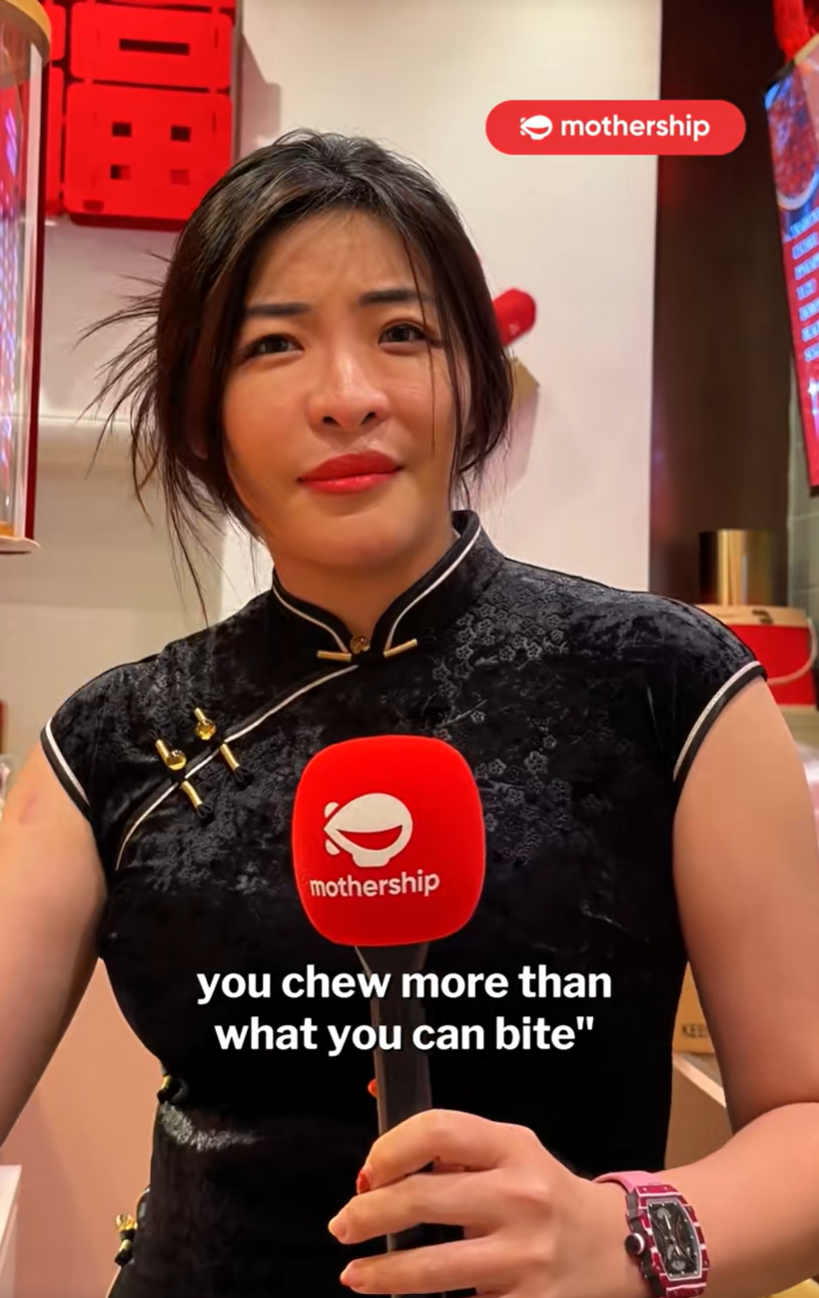
When Simbian’s kitchen caught fire, the instinct of most onlookers was sympathy. Naysayers commented she should not bite more than what she could chew. But here is the thing about silver linings. They are never visible to those who are staring at the problem. They only reveal themselves to those who dare to look just slightly beyond it.
And what was the silver lining hiding inside Century Bakkwa’s darkest moment?
The story spread across social media, news portals, and word of mouth faster than any advertising campaign. Thousands of Singaporeans who had never heard of Century Bakkwa suddenly knew the brand and more importantly, knew her character.
The fire reveal a team that showed its true loyalty by forgoing their CNY holiday and stay. The sales that surged! Not because people sympathise her but because of the way she handled the situation.
For Financial Advisors, every difficult client conversation has a silver lining. It is a chance to deepen the relationship.
Every market downturn has a silver lining. It is a chance to demonstrate our calm, our expertise, and our conviction when others are running scared.
Every rejection has a silver lining. It is a feedback that sharpens our approach and filters for the clients who are truly right for us.
Every career setback has a silver lining — the very experience that will make you more relatable, more credible, and more human to the next prospect sitting across the table from you.
The silver lining is almost never obvious in the moment. It requires a specific kind of vision but it is not blind optimism. Every entrepreneur and every great financial advisor who has ever built something lasting from scratch need thise disciplined and trained mindset of.
3) Find The Solution Hidden Inside Every Problem
When reporters pressed Simbian Chua on how she managed to fulfil every single Chinese New Year order, she simply smiled and said: “It’s a secret.” Those simple three words contain within an entire philosophy of entrepreneurship that most people spend their whole careers trying to articulate.
Because what she was really saying was something far more profound. The message that I hear is “I refused to stop looking until I found a way.” The secret was never the method but the Mindset.
We will probably never know exactly how she did it. She might had picked up the phone and called every industry contact she had built over years of honest business. How she managed to do it is beside the point. What matters is she looked for a solution because she believed one existed. Logic would have told her to issue the refunds and call it an act of God. But because somewhere deep in her character was a conviction that the problem was not a full stop. That single belief is what separated her response from what most people would have done.
Our clients will always come to us with situations that feel, at first glance, like full stops. In these moments, there are two kinds of advisors.
The first looks at the situation, runs the numbers, shakes their head quietly, and offers a solution so conservative and so limited that it barely qualifies as hope. They have accepted the problem as a full stop and they stopped looking.
The second advisor does something different. They ask more questions and they explore angles that are not immediately obvious. They look for the solution because they believe one exists.
That belief is what makes a great financial advisor from a good one.
4) Customer Trust Is Your Most Valuable Asset
In the immediate aftermath of the fire, Simbian did something that speaks volumes about her character. She posted publicly, informed her customers about the delay, and offered full refunds to anyone who requested one. She did not hide. She did not make excuses. She communicated.
And when the smoke settled, she fulfilled 100% of CNY orders. Despite this setback, she also gave two months bonus to the staff. Think about what that signals to every future customer, every future employee, every future business partner. This is a woman who, at her lowest point, chose integrity over self-preservation. That is the kind of trust you can only earn it through action and no amount of money spent on advertising can create such trust.
As a financial advisor, are we building the same trust with our clients, colleagues and business partners?
Trust is built in the small, unglamorous, often invisible moments that no one gives a second look. It is earned through sitting through a difficult conversation about a claim that did not pay out the way anyone expected, without deflecting blame onto the insurer. It is telling a prospect that the product they are excited about is not actually right for them even though saying so costs you the commission.
Here is something that took many great advisors years to truly understand. Clients do not trust us because everything went smoothly. They trust us because of how we behaved when things did not and everything else is just relationship maintenance.
5) When the Smoke Goes Up, the Good Ones Show Up.
When word spread that her kitchen had burned down two days before Chinese New Year, other bak kwa shops which are her competitors reached out and offered to help. Think about this again…In one of the most competitive business seasons of the year, when every kilogram of bak kwa sold matters and every customer counts, the people who stood to benefit most from Century Bakkwa’s misfortune chose instead to offer a hand.
I don’t think this happened by accident. Kindness from competitors is never random especially in this period when they could had hold her to ransom. I beleive it is the return on an investment that Simbian had been making for years without knowing she was making it.
The way she had conducted her business. The way she had treated people in the industry. The reputation she had built not just with her customers but within her trade community. The quiet, consistent integrity that had made her someone worth helping when the worst happened. You do not receive that kind of support from your competitors unless you have spent years being the kind of person who deserves it.
Here is a question worth asking ourselves -Who Would Show Up for You?
If our practice faced its own version of the fire tomorrow such as a sudden illness, a personal crisis, an unexpected regulatory challenge, a season where everything seemed to go wrong at once, who in your professional world would reach out and offer to help? Not out of obligation nor a formal arrangement but because of the relationship we had quietly built over years of showing up as someone trustworthy, generous, and genuinely good to work with.
The answer to that question is a direct reflection of how you have conducted yourself in this industry.
Think about what those other bak kwa shops demonstrated by reaching out. They demonstrated that true professionals do not celebrate a competitor’s misfortune. They demonstrated that the industry they belong to is bigger than any individual business within it. In financial advisory, we would do well to carry the same spirit.
The advisor who helps a struggling colleague instead of quietly benefiting from their absence. The senior advisor who mentors a new entrant with genuine care instead of guarding their territory. The team leader who shares a strategy that works instead of keeping it close to maintain an advantage. The practitioner who shares best practices that lift the professional standard instead of bad-mouthing other competitor.
Build our character before we need it and when our fire comes, we will not face it alone. The good ones will show up.
 My IFA@Sg